
Stablecoins make it easier to move value across platforms, networks, and geographies.
But supporting them often requires the ability to convert between different stablecoins when counterparties, corridors, or chains don't run on the same asset.
Brale helps customers do exactly that, powering low-cost stablecoin swaps as just one of an array of features offered with stablecoin orchestration.
Stablecoin-to-stablecoin routing
For payments companies, card and wallet programs, and others, stablecoin-to-stablecoin exchange is usually a routing step inside a workflow:
A sender funds in USDC, but the recipient prefers USDT.
A business holds balances in one stablecoin but settles in another.
A product needs to support multiple stablecoins across customers without maintaining separate integrations for each one.
In other words, the job is to make the payment work, even when assets vary.
What Brale offers
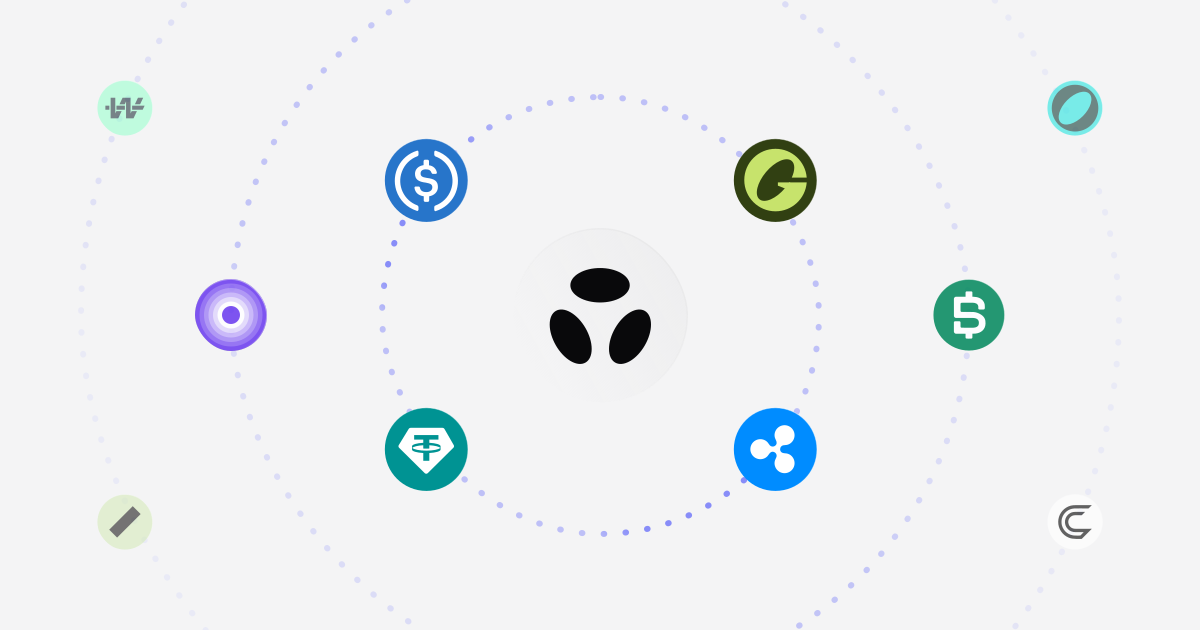
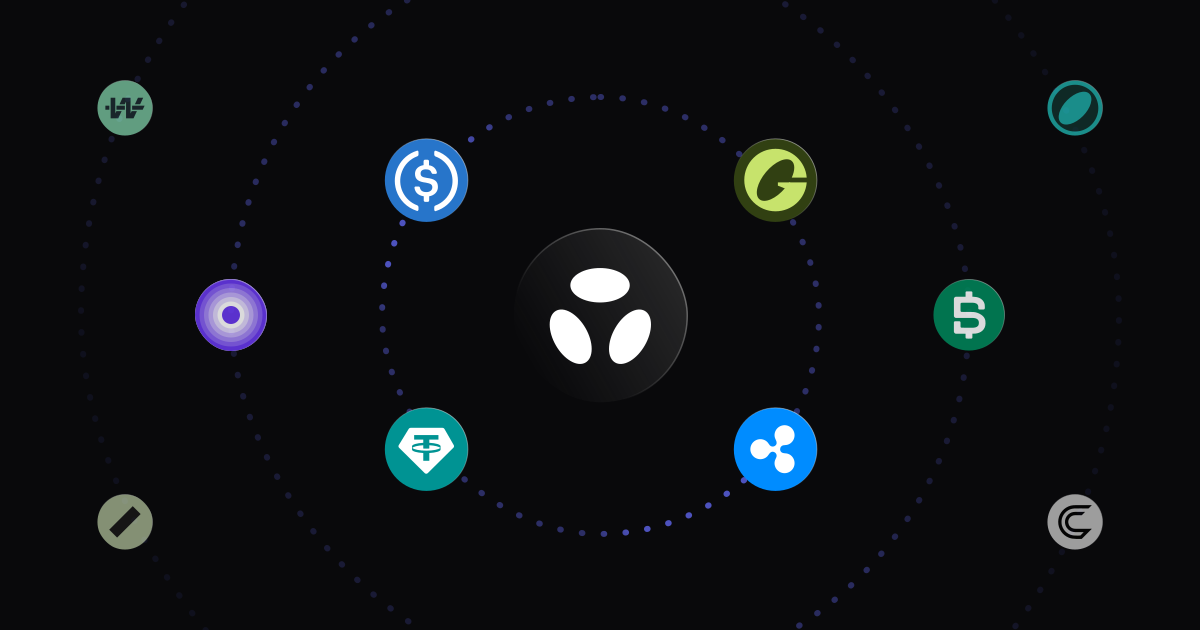
Today, Brale supports swaps across major stablecoins including USDC, USDT, USDG, and RLUSD, as well as Brale-issued stables.



That lets customers treat the choice of a stablecoin as an implementation detail, not an architectural constraint.
One integrated API surface
Instead of stitching together separate vendors for different stablecoins, Brale customers get one integration path for stablecoin-to-stablecoin exchange as part of the same platform they use for regulated stablecoin operations.
Pricing designed for use
With rates as low as 0 basis points for USDC on-ramps, pricing is structured so stablecoin swaps are a routing primitive, not a special-case decision.
Rates vary by stablecoin on-ramp and off-ramp, but the overarching goal remains the same: making exchanges easy and inexpensive.
Who it helps
Brale's ability to power stablecoin-to-stablecoin swaps is relevant for teams running on-chain flows where stablecoin fragmentation is a fact of life, including:
Payments companies supporting multiple stablecoins across customer segments
Platforms that need to abstract stablecoin choice away from end users
Operators building workflows where stablecoin needs change by corridor, counterparty, or integration
If you're evaluating stablecoin orchestration, or you want to support swaps between stablecoins without having to build your own stack, reach out.
Contributors
- Chase MerlinSr Product Manager
- Michael StacyHead of Communications