Brale processed more than 20 times the volume in July than it did one year earlier.
But volume is only part of the story.
Over the past month-plus, the team shipped across the product, infrastructure, and ecosystem surfaces that make stablecoins usable in production.
Here are the highlights:
ION Protocol is live
Brale introduced ION Protocol, enabling native, 1:1 movement between Brale-issued stablecoins and blockchains in seconds, without liquidity pools, bridges, or slippage.
ION launched with 20 partners at the first Chicago Stablecoin Day.
CoinDesk covered the launch, and the protocol is now part of Brale's broader effort to make liquidity more direct, more native, and easier for ecosystems to use.
Temple and USDA became major forces on Canton
Temple's Brale-issued USDA grew to more than $4 million in circulation and became the largest stablecoin on Canton.
Temple became Canton's No. 1 application by network revenue and generated millions of Brale-attributed transactions during July.
Tokenized assets and stablecoins are complementary building blocks: One brings value onchain, while the other provides native cash for trading and settlement. Canton connects them, Brale provides the regulated dollar infrastructure, and Temple puts it to work.
Brale accounts are now open to individuals
For the first time, Brale can support individual verification, transactional accounts, virtual accounts, automations, and onramps.
The team demonstrated the experience live at Day Zero 07.
Individual accounts expand the surface area of what teams can build on Brale. Stablecoin programs can now support more account structures and more end-user workflows through the same infrastructure layer.
We'll have much more on individual accounts soon.
Tokenization is broadly available
Teams can now launch and operate token programs across nearly 30 chains through one API.
Brale provides the infrastructure for minting, burning, transfers, signing, reserves, and attestations, so teams can focus on the asset, program, or application they want to bring to market.
Supporting new token programs should not require rebuilding the same infrastructure stack each time.
Onboarding speed has surged
Brale made onboarding substantially faster.
75% of accounts are now approved in under nine minutes. More than two-thirds auto-approve, averaging approximately 23 seconds.
Approved in <9 mins
Auto-approve
Avg. auto-approval time
That matters because stablecoin infrastructure has to work at the speed of the teams building on it. Faster onboarding means fewer launch blockers, less operational drag, and a cleaner path from interest to production.
Passkeys are live
Customers can now use phishing-resistant, hardware-bound authentication.
Passkeys strengthen account security while making access easier. That combination matters for financial infrastructure: better security should reduce operational risk without adding unnecessary friction for users.
EVM infrastructure was rebuilt for scale
Brale rebuilt its EVM transaction processing infrastructure.
Median end-to-end EVM transaction times fell to 12 seconds in July, 75% faster than in May and June.
The work improves speed and reliability today, while making it easier for Brale to add future EVM chains without maintaining separate legacy paths.
Brale partnered with Braid
Braid is integrating Brale to make stablecoin issuance, custody, settlement, and treasury workflows available to community banks, credit unions, and their programs.
One platform integration can distribute stablecoin capabilities across an entire network of financial institutions.
Braid has already helped its customers move more than $40 billion.
The ecosystem came together
Beyond providing a launchpad for ION, Chicago Stablecoin Day served as a celebration of the growing stablecoin ecosystem. We were proud to partner with Coinflow, CMT Digital and zerohash on the inaugural event.
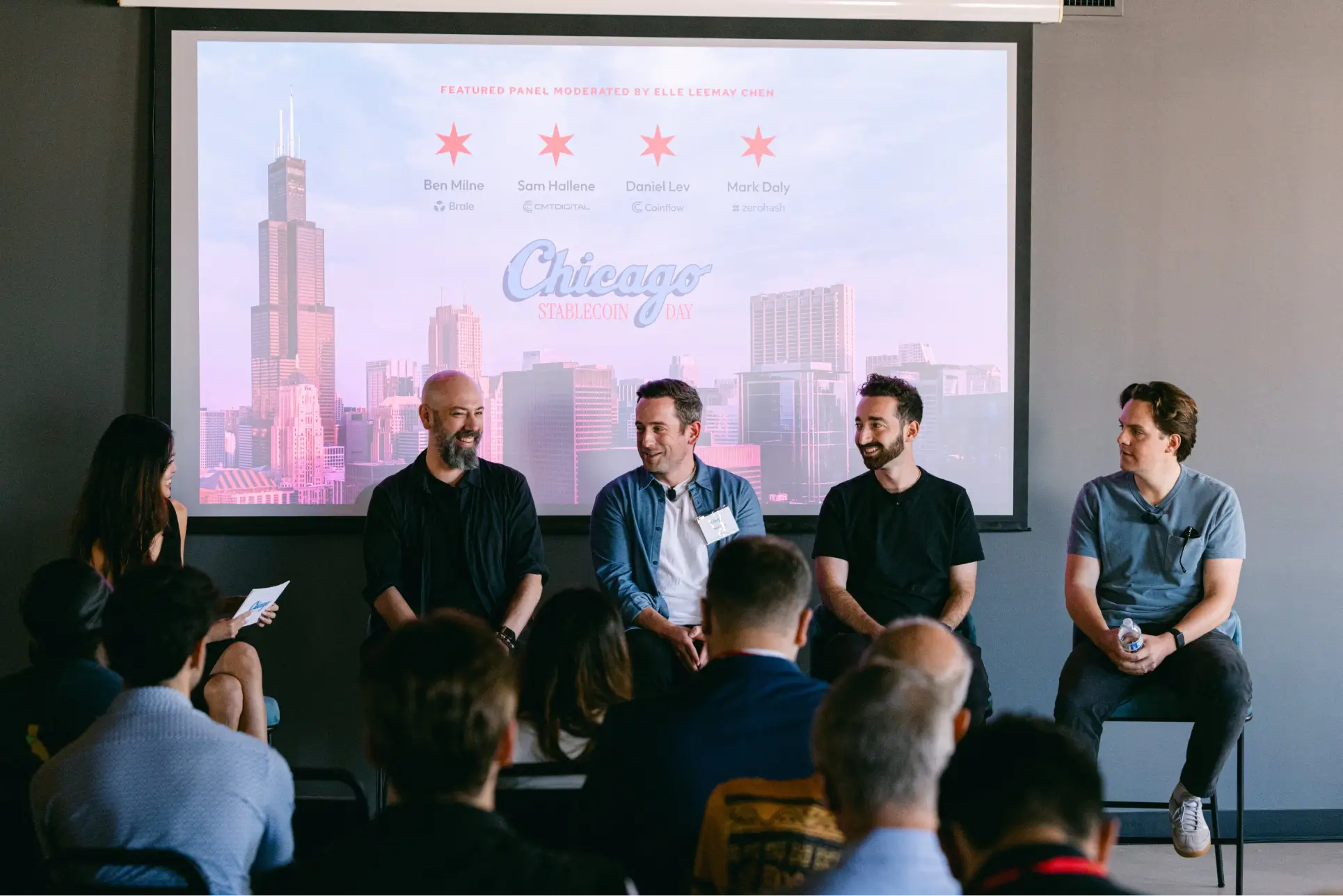
Next, we hosted Day Zero 07, featuring live demonstrations from Brale, Coinflow, Capa, Turnkey, and the Stable Coin Company. The demos covered individual accounts, merchant settlement, international payments, non-custodial controls, and 1:1 stablecoin swaps.
These events showed the same pattern from different angles: Stablecoin infrastructure is moving from isolated products to connected financial workflows.
Stablecoins are for everyone
Brale now supports 300+ stablecoin programs and nearly 30 blockchains.
The pieces are coming together: issuance, individual accounts, USD rails, tokenization, institutional markets, and ecosystem liquidity.
All through one platform.
If you're building stablecoin workflows, launching a token program, or connecting an ecosystem to regulated money movement, Brale can help.
Contributors
- Chase MerlinSr Product Manager